Throughout history, the Kurdish people, whose most humane demands were rejected, had their connection severed both with their own people and with the entire world.
Every path to expressing themselves was closed, and they were left to nonexistence. Yet in no period of history did the Kurdish people bow before these practices, succumb to despair, or cease searching for paths to a solution. One of the most important stages in human history to influence many societies was undoubtedly the French Revolution of 1789. Under its influence, many nations later attained the right to independence, and in the following century the world's great empires, especially the Ottoman Empire, moved toward collapse. The Kurdish people also made many attempts not to be deprived of this right. On one side, these attempts proceeded through armed uprisings led by many people; on the other, intellectual and scientific transformations were pursued through media work. The Kurdish people have undoubtedly encountered knowledge for centuries, yet Kurdish scholarship and enlightenment did not benefit them in many periods. The system of rulers appropriated all the valuable experience and knowledge that emerged on the stage of history in Kurdistan and used it against the peoples of Kurdistan. Ideas of nationhood spread by the French Revolution could be realized only through peoples recognizing, accepting, and upholding themselves. This could be achieved most effectively through media. Media had spread in the Middle East in the seventeenth century, and this step was taken in Kurdistan in the eighteenth. The Bedirxan family first led it. The Bedirxans are a very extensive family in Kurdistan. On April 22, 1898, in Cairo, the capital of Egypt, Mîqdat Mîthat Bedirxan published the first Kurdish newspaper, 'Kurdistan.' For the first time, a Kurdish-language newspaper was being issued for Kurds, marking the beginning of the Kurdish people's enlightenment. This date is still celebrated as Kurdish Journalism Day.
This attempt undoubtedly took place with Ottoman approval. The Ottoman State knew at the time that if it did not grant the Kurdish people certain opportunities, they too would be driven, like other peoples, toward the idea of independence. It therefore permitted the newspaper both to continue its influence over the Kurdish people and to forestall Kurdish movement. The paper became a foundation for developing Kurdish identity and language. It was initially planned, according to the conditions of the period, to appear once every fifteen days; because of difficulties, it was necessarily published once a month. In its opening section, it stated its aim as awakening the people to Kurdish identity and bringing them closer to art and progress. Kurdistan published its first three issues entirely in Kurdish. Because the Kurdish people embraced the paper, it sought to become part of their awakening. After a time, the Ottoman State banned it, yet it continued entering Kurdistan clandestinely for a long period. When the state saw that a movement was beginning among Kurds through the newspaper, it took extensive measures against its distribution and imposed harsh penalties on those who distributed it.
Despite these penalties, the newspaper's content embraced one aim: awakening the Kurdish people, conveying the necessity of education, and teaching them to uphold their rights. One issue expressed it as follows: 'I grieve for the Kurds; Kurds are more perceptive and intelligent than many peoples, gallant, true and firm in their religion, strong, and yet, like other peoples, they are neither educated nor wealthy...'
Occupation experiences its greatest fear in the face of peoples' awakening and the spread of truth. In every historical period, this fear has been the fate of bloodthirsty rulers. The Ottoman State experienced it too and sought to take precautions. Yet the Kurdish people had once become aware of the truths. After Kurdistan was shut down, newspapers continued to be issued under different names. This development would continue for nearly two centuries until the emergence of the Apoist Movement. Every newspaper published fundamentally aimed to enlighten Kurdistan and worked toward that end.
In 1908, the Second Constitutional Era was proclaimed, after which major changes began in the political and social life of the Ottoman Empire. The Kurdish people sought to benefit from these changes and began to act. On October 5, 1908, the newspaper 'Kurd Teavûn û Terakkî' was published. Its director was the renowned poet Pîremêrd, whose real name was Tevfik Beg of Silêmanî. The paper bore the name of the Kurd Teavûn û Terakkî Society, meaning 'Newspaper of Kurdish Cooperation and Progress.' Nine issues were printed.
Kurdish journalism increasingly consolidated its place in the life of Kurdistan with new ideas and new names. This work advanced not only through changes of name but also in content. Some newspapers and journals published in that period were:
The newspaper Jiyan began publication in 1926 and was published in Silêmanî until 1936. It printed 553 issues and was closed by state authorities in 1938. Pîremêrd also published this newspaper.
When Jiyan was closed, Pîremêrd published the newspaper Jîn as its continuation. He continued its work until his death in 1950, and it continued after him. A total of 1,700 issues were published before it was closed in 1963.
The journal Gelawêj was also published in Kerkûk between 1941 and 1950.
Another publication was the journal 'Rojî Kurd.' It criticized the outlook of the Committee of Union and Progress in order to create anger among the Kurdish people. It too faced attacks from the government of the period; after four issues, publication was suspended and its name changed to 'Hetawî Kurd.'
National movements increased during the First World War. In terms of loss of life, the war was immense and terrible, but in scientific terms and in the awakening of nations it produced very great effects. Newspapers and journals aimed at awakening nations multiplied in this period. The journal Jîn was also issued then. Affiliated with the Society for the Advancement of Kurdistan, it was published in 1918.
Another publication was the journal Hawar. The Bedirxan brothers, Kamûran and Celadet Bedirxan, began publishing it in Damascus on May 15, 1932. It did not appear regularly; existing conditions affected its publication. A total of 57 issues were released before it ended on August 15, 1943.
As we see, the Kurdish people's awakening had begun and continued despite every attack and pressure. Yet these attempts did not reach the entire Kurdish people, and forming a common idea at the level of nationhood repeatedly remained incomplete. There are undoubtedly many reasons for this shortcoming, and they exerted very great effects.
With the emergence of the Apoist Movement, a broad and deep culture was built upon the experience gained. Kurdish media took on greater form with the Freedom Movement and brought the labor of many pioneers in Kurdistan's history to a satisfying and valuable result. From the beginning of the Freedom Movement to today, media work has been a major field of struggle in Kurdistan. The Kurdish people became aware of themselves through a free identity and also became a great shield in the unity and protection of the Kurdish language. This culture was certainly not built easily; great prices were paid. From Martyr Mazlum Doğan, one of the founders of the newspaper Serxwebûn, to Tûfan Sefqan, hundreds of martyrs were given. Each worked moment by moment so that truth might prevail in Kurdistan and the spirit of embracing freedom against Turkish occupation might spread among the Kurdish people. They shed sweat, upheld truth with a self-sacrificing stance amid the greatest hardships, and stood against the enemy.
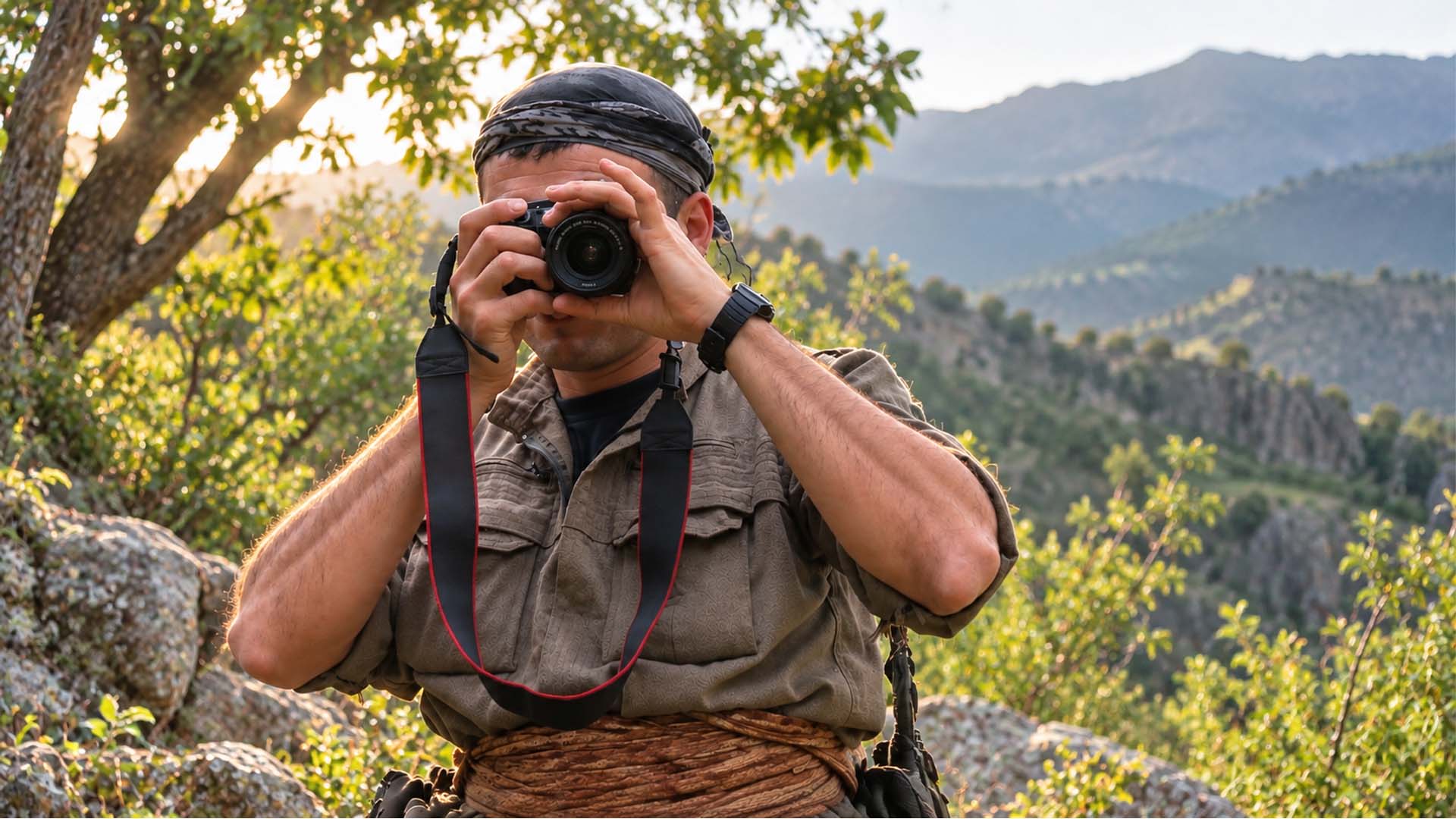
Mountain media, through its self-sacrificing members, left its mark on the history of the Kurdish people. Each of these heroes devoted great labor so that this work might achieve a satisfactory result and the guerrilla struggle might reach society in every respect. They took part with a self-sacrificing stance not only in media work but in every aspect of guerrilla life and struggle, playing major roles. Martyr Bêrîtan was an early member of mountain media; she also assumed responsibility as a unit commander and entered the pages of history through her legendary action. With his sacrifice and enthusiasm, Xelîl Dağ led not only media work but every task. Armanç Kerboran made a great contribution to media with his pen, then fought heroically as a regional commander and reached martyrdom. Just as Martyr Arjîn labored in media, she also took her place as a valuable commander on the battlefield and was martyred. As a worthy student of Martyr Xelîl Dağ, Martyr Elî Kanîroj brought innovation to mountain media in many areas; he also served as commander of a mobile unit in Botan. Martyr Zerdeşt was a steel-hearted guerrilla worker and commander who approached his work with great seriousness and took steps forward. Many other martyrs of mountain media added their color through their versatility. This shows that mountain media provides a major foundation for guerrilla life in many fields and that enormous labor is devoted to it. The issue is not merely using a camera, recording a voice, or writing a text; the essential issue is placing every tool and method at the service of truth. A truth exists before us; against it are attacks and hardships, and there are love, sadness, distress, and joy. Following and sharing these in the moment is also the writing of history. Mountain media pioneered this and continues the same role today.
The most fundamental point is this: in the mountains of Kurdistan, the field of media became a great shield against the enemy, and the work carried out there dealt it heavy blows. The Turkish State therefore continually targeted and killed the heroes engaged in this work. Yet with every martyrdom, dozens of heroes took their place, and the search for freedom grew stronger than before. On July 10, 2018, the Turkish State once again sought, with immense aggression, to silence mountain media and deal it a severe blow. In an air strike, three heroes of the Kurdish people—Elî Kanîroj, Helgurt Bagok, and Xemgîn Amed—reached martyrdom. In the person of these self-sacrificing fighters and in memory of all martyrs of mountain media, the Central Headquarters Command of the People's Defense Forces declared this date Mountain Media Day.
This day represents all those who sacrificed their lives for truth. Though their names may differ, it represents those whose aims, desires, feelings, and thoughts always pursue truth. In the persons of Martyrs Elî Kanîroj, Helgurt Bagok, and Xemgîn Amed, it voices the memory extending from Mazlum Doğan to all martyrs of mountain media. It is the day of embracing the followers of truth and the eyes of reality: the martyrs of mountain media. Only looking, seeing, listening, and writing truth as they did can give this day meaning. Giving it meaning is therefore a primary duty of every individual.
Through their stance, the ardor of their hearts, their telling of truths under every condition, and their becoming followers of truth, these heroes left their mark on history. Through their struggle and their cameras, they became the language and action of truth. In their person, truth has now broken every barrier and reached everyone who seeks freedom. Magnifying their memory is possible only by becoming a true follower of truth and upholding their legacy.