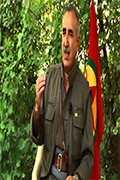
 In a recent interview with Deniz Kendal from the ANF, Kurdistan Workers Party (PKK) Executive Committee Member Murat Karayilan said that the group’s imprisoned leader Abdullah Ocalan’s well-being was under threat and that an attack on him would be disastrous for Turkey.
Karayilan added that the ‘Battalion of Immortals,’ an elite force within the PKK would be fully activated and target politicians involved in the decision to eliminate Ocalan.
The high-ranking PKK member also commented on the Kurdistan Communities’ Union’s (KCK) recent call for a national Kurdish congress.
‘Targeting Ocalan will be disastrous for Turkey’
Deniz Kendal: KCK Executive Council Member Zubeyir Aydar spoke during the Kurdish Conference at the European Parliament and said that the AKP and MHP were working on a project to murder Kurdish leader Abdullah Ocalan. Aydar added that they had received information about this plan. What are your thoughts on this?
Murat Karayilan: Yes, it is a very important issue. Our movement received information on this issue. The AKP and MHP, and even some traitors of Kurdish origins, are debating on the murder of Leader Apo (Ocalan) and discussed what the reaction of Kurdish people would be if he was annihilated. Zubeyir Aydar’s announcement during the EP is based on this information. This should be taken seriously; this is why the KCK made an announcement and called upon different groups to take action.
Our people, the peoples of Turkey and all parties should know that the fascist [AKP-MHP] alliance has similar projects. Their unthinkable and dangerous approach shows how serious this situation is. In this regard, our people and all parties that want Turkey to become a free and democratic country should struggle carefully and take a stance against such racist, fascist and frantic plans. Such a plan would trigger a Kurdish-Turkish war that could continue for decades, and would not be accepted by any Kurd who does not deny her or his identity.
Leader Ocalan brought the people of Kurdistan to this stage of history. With his ideology, thought and struggle, he brought Kurdish society from the brink of destruction to a modernising and struggling society. He is both a modern leader and a philosopher. He has written nearly 200 books. His life, struggle and philosophy have deeply inspired hundreds of thousands of Kurdish youth. Nobody can get rid of this influence from the hearts and minds of Kurdish women and youth. Those who attempt to murder Ocalan will bring disaster. Approaching a leader, who has become the symbol of the freedom of women and society in Kurdistan, in this way means playing with fire. Leader Ocalan is a force for change and coexistence in Turkey. He is the modern leader of the march for people’s fraternity, coexistence and revolution in the Middle East. Today, the Democratic Confederalism and Democratic Nation paradigm is the only project that can solve the problems of the Middle East. Targeting him means targeting the democratic future and union of Turkey as well as the existence of Kurdish people.
If people still consider living together in peace and democracy in Turkey, despite the deepening war in the country, it is because of Leader Ocala. Targeting Ocalan is a madness that will add fuel to the fire in Turkey and bring disaster to the entire country.
‘If there is an attempt on Ocalan’s life, the Battalion of Immortals will be activated.’
D.K: What are your comments on the discussions about a physical attack on Ocalan?
M.K: Even discussing this subject is reason for struggle. As a people and as a movement we cannot accept such a thing even being talked about. So, we will fight against this with everything we have.
As well as our society engaging in an insurrection on the basis of a fracture between Turks and Kurds that would take years to heal, the Battalion of Immortals who have been organised for such situations will also take action. The Battalion of Immortals are sleeper-cells; always active forces ready to sacrifice their lives. The motto of this battalion is 'to target all politicians and leaders involved in the decision to attack Leader Ocalan'.
Of course things don’t have to come to that. We don’t actually want to talk, or think about these things. But we need to remind everyone that this situation, this emergency valve is there. This is not a threat, but the stating of a fact. There are such guards. And, with such an attempt by the Turkish state, the number of these guards will increase a hundredfold. If there are a thousand now, there will be a hundred thousand then. In short, when we say, “Thinking of this is playing with fire,” we are not exaggerating, or shouting threats left and right. Nobody should think that. If you are talking about destroying the strategic future of a people, we as the representatives of this people need to express the facts as clearly and openly as possible. In spite of this, if you are willing to take a chance, you need to think about what it will take away from you.
‘Whoever says they will destroy the PKK will face the consequences.’
D.K: Aside from this, Turkish politicians constantly talk of ‘destroying the PKK and making peace with Kurds.’ Is this possible?
M.K: If you ‘destroy’ the patrons of this cause, with whom will you make peace? Look at what Saddam did? Saddam implemented projects to destroy the Kurds, he excluded the Peshmerga, he even struck a great blow to the Kurdish Movement with the Algeria Treaty, and created Kurdish autonomy by collaborating with traitor Kurds.
Did that last? No. Does anybody talk about Kurdish autonomy in Iraq in the 1970s and 80s? No, because it was not genuine. So now, you push the patrons of this cause, the people who have devoted their lives to this cause, the families who have lost their children and the clans aside, and on the other hand say that you will ‘develop a solution’ with some traitors who have never protected their own kind, who have acted in enmity, who are not respected at all in society. What kind of a solution is that? Where in the world have you seen such a solution work, why would yours? Kurdistan’s society today is not one to fall for such disingenuous projects.
Today, as a people, as a society and as a movement, we are at our strongest. The flow of history cannot be stopped any longer; nobody is strong enough for that. Those who think they can do this with a few stooges and technical superiority will face the consequences of their actions.
‘The Kurds need a common strategy now.’
D.K: A discussion about national unity has begun among institutions, organisations and prominent people in Kurdistan following the KCK Executive Council Co-leadership’s recent statement. A wide array of people has responded positively. But there are circles that have yet to make their stance on this issue known. What do you think?
M.K: I wholeheartedly agree with this call for national unity. There will undoubtedly be a restructuring in the region after the war in the Middle East. The region will not stay the same. And the Kurds have created important possibilities and opportunities. The Kurdish people need national unity to turn these opportunities and possibilities into a foundation for freedom. Enough is enough!
The Kurds should have a common strategy now. We need to end this fragmentation. Nobody should think ‘we can achieve results in certain parts of Kurdistan without national unity’. That is not going to happen. At this time the enemies of the Kurdish people have made it their core strategy to destroy the unity among Kurds, develop dissent and create an internal conflict. As Kurdish politicians and the patriotic forces of the Kurdish people we should not fall for this. The way to defeat these attacks is to come together in a policy of national unity.
This can be a congress, it can be a conference, or it can be a narrower and more urgent platform - in some way, an initiative that will reflect the Kurdish people’s national stance. It will be a great shame if this does not happen. Forces that could never be near can come together - Turkey and Iran for example are about to go into a war over the conflicts in the region - but on the other hand their foreign make nine phone calls in one day.
This is the Age of information and communication. That is true. But it is also the Age of dialogue. If Kurds don’t try to solve their internal issues through dialogue, then it will mean they are left out of this Age. Nobody will value the Kurds. Kurds divided will not be valued by anybody. Outside forces will only create relationships with Kurds for their own interests, but they will not show any measure of value that corresponds to the actual Kurdish national reality. In this sense, we are in need of unity, as an absolute necessity. I find it necessary to stress this very strongly.
Source: ANF, Kurdishquestion
- Details
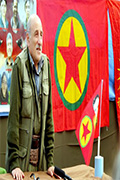 The need for a national congress for the national-democratic representation of the will of the Kurdish people is unquestionable. In this regard, the footing attained in the Summer of 2013 has now matured to an even further level. Many were expecting this historical dream to materialise; the inability in doing so, has left the Kurdish public disappointed.
National unity is a historical problem for the Kurds. The incapability of unifying is one of the main reasons as to why the Kurds are still exposed to cultural genocide. One of the main ambitions of every national liberation movement has been to construct a national unity. The embodiment of this would be a national congress representing the national will.
At the beginning of the 1970s, freedom struggles were sprouting across all four parts of Kurdistan; these movements had targeted the establishment of a national congress in order to attain national unification. At the beginning of the 1980s there were efforts to form a national congress in exile. However, due to certain attitudes these efforts were in vein.
The wrong attitudes towards the Kurdistan National Congress consisted of deeming this project as a platform for domestic political calculations and internal conflicts. During the 1980s, both the KDP and the PUK were carriers of this attitude. In other words, they utilised this historical platform to fight out their internal differences.
On this subject, the PKK has adopted a true understanding of unity. Although it was a newer and younger movement, its understanding of unity was in line with its understanding of freedom. This was largely thanks to PKK leader Ocalan's deep-rooted patriotic consciousness.
The intensification of the national uprising in Northern Kurdistan and the inception of a new post-Gulf War status quo in Southern Kurdistan made national unity even more important which in turn made the establishment of a national congress even more important. This led to increased efforts from PKK leader Abdullah Ocalan in the quest for a national congress. However, the international conspiracy that began on the 9th of October 1998, ensured that these efforts were left incomplete. However, these efforts did result in the founding of what is today the Kurdistan National Congress (KNK).
The nation-state-like structure in place in Southern Kurdistan since 2003 and the revolution of 19 July 2012 in Rojava (Western) Kurdistan has made the establishment of a democratic national congress even more vital. The situations in the above mentioned parts of Kurdistan and the existing internal problems among the Kurds are all reasons that make a national congress a necessity.
Obviously, regional developments are also impacting on Kurdish requirements. The deductions of the gridlocked Third World War in Syria both presents a platform for development for the Kurdistan freedom movement but also presents a potentially endangering platform for Kurdish demands. This is another important reality that makes the establishment of a national congress crucial.
All of these circumstances formed the ideal setting witnessed in the Summer of 2013. Although historical necessities have become even more vital and although internal and external circumstances are now practically dictating the formation of a national congress, the KDP's unfortunate approach and impeding stance has deemed all efforts unsuccessful.
Statements made by the KDP on this subject are wrong and do not reflect the truth. Everyone is aware of the sensitivities of the Kurdish people when it comes to national unity, therefore, the KDP's statements are intended to mislead and cover their impeding stance. In order to complete the long-lived dream of national unity, the KDP's obstructive stance must be overcome.
The KDP's obstructive stance is firstly based on the name of the congress. Will the national congress be a Kurdish congress, or a Kurdistan congress? It is alleged that without first establishing a Kurdish national congress, it is unrealistic to establish a Kurdistan national congress encompassing all the peoples of Kurdistan.
Although at first glance this seems to be a reasonable objection, at closer inspection it is easily understandable that this is an anti-democratically charged nationalism. The right way is to intertwine Kurdish national unity and the democratic national unity of Kurdistan.
KDP administrators are also interjecting that the constituent make-up of the congress is also a problem. They allege that the PKK is demanding for more than half of the delegates of the congress in order to pass through its own agenda. As a matter of fact, it is not even possible to establish a national congress that works on majority decisions. The PKK's proposal is for a national congress that only works on unanimous decisions in which all members are in consensus.
The main reason as to why a national congress is unable to meet is due to differences in approaches towards the administration of the congress. The KDP's obstruction is based on this. The PKK's proposals in this regard are extremely reasonable and applicable. The PKK proposes a co-presidency model for the congress in order to ensure equal representation for women and for a more libertarian and democratic system in general. Furthermore, the PKK even proposed Masoud Barzani to be the founder president of the congress.
Despite this, the stance of the KDP has not been constructive. Firstly, it rejected the idea of a co-presidency without discussion. Instead, the KDP demanded that Masoud Barzani be the president of the congress on his own for four years. Whereas, even if not a co-presidency then at the very least a presidency council is required. Even so, it is extremely anti-democratic and therefore unacceptable for one person to hold the presidency for an uninterrupted term of four years. The PKK's proposal in this regard was for the presidency to be changed every year.
It is enough for the national congress to have certain fundamental responsibilities. This could be in the areas of diplomacy and defence, administered by an legislative organ. It is vital for Kurdish diplomacy and defence to be administered on a national level. It is also vital for all national policies to be coordinated by an executive committee.
It is worth noting that none of the above mentioned obstacles are obstacles that cannot be overcome. The overcoming of these obstacles will ensure the materialisation of this historical requirement. In this regard, all Kurdish parties, institutions and intellectuals must act responsibly and sensitively. This is a prerequisite for patriots and democrats.
Duran Kalkan - Member of the Executive Committee of the PKK
- Details
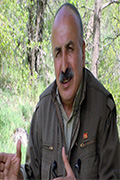 No one can doubt the socialist identity of the Kurdish freedom movement and the socialist identity of the Kurdish people's leader Mr. Abdullah Ocalan. The Kurdish freedom movement and its leader define themselves as the inheritors of all the socialist strugglers in human history.
Of course there are differences between the PKK and other socialist organisations in Turkey. The PKK has restructured itself as a result of extensive self-criticism and a thorough criticism of classical socialism and its practiced forms. It sees classical socialist theory as insufficient. The PKK believes that classical socialism is not anti-capitalist enough and is too involved with the state; whereas the state is a tool of suppression. To topple a state in order to create a new one is not revolutionary practice, rather, to surpass, topple or minimize the hegemonic system and replace it with a socialist system by implicating socialism in the moment is the PKK's adopted method. To topple a state is not the same as toppling the system. To liken these two things together is a sign of deviation from socialism.
Even those that have shown great belief and effort in developing socialist theory and even ultimately sacrificing their lives to this end have maybe lacked in completely liberating themselves from capitalism. Capitalism, with its mentality, economy, sociality and culture is a totality. To reject, surpass and exclude oneself from capitalism as a totality is vital. This exclusion must start immediately; to delay this exclusion and synchronise it with the abolition of a state is a deviation from socialism. To insist on creating a new state on grounds that it will be a socialist one, is at the very least a lack of an acquaintance with the states ontology. The Kurdish freedom movement has purposefully distanced itself from the hegemonic system's systemic institutions, lifestyle and culture. The PKK has killed the capitalist, the state and the sexism within.
Certain circles are claiming that the Kurdish freedom movement is a "bourgeois movement", or that it has retreated from its ideals. On the contrary, the Kurdish freedom movement questions the socialist identity and the lack of depth in socialist theory of those who are putting forward these types of claims. Firstly, the very lifestyle of the PKK puts across what kind of socialist organisation it really is. Every aspect of life within the PKK is organised communally and collectively. Of course as one of its principle ambitions is to democratise society the PKK builds relationships with a wide spectrum of social movements and civil organisations. All socialists must see this as a practical obstacle that needs to be dealt with by all revolutionary movements on the road to revolution.
The PKK, as a socialist movement, will always seek socialists and leftist democrats when forming political alliances. However, as a movement of social democratisation, the PKK holds responsibilities against society as a whole and therefore wider strategic alliances with all social factions is understandable. The negotiations in Imrali Island are being developed within these parameters. Yes the PKK wants to make the government take certain steps, but this is happening as a result of our joint struggle with the democratic forces in Turkey; in other words we are forcing the very people we are struggling against to take positive steps. To argue that socialist movements do not negotiate with the state is a delusional approach to the political struggle inherent in socialist struggle. We are not talking about negotiating on ideals and principles. These are mere political negotiations. These are not negotiations on the struggle itself, but negotiations on the means of struggle.
There is now a major opportunity for the left to develop in Turkey and fill a gaping hole in Turkey's political spectrum. The people of Turkey want justice, equality, democracy and freedom; and for this there is a need for a decent leftist platform to struggle for these demands. However, this platform has been left unmanned for at least the past fifteen years. Conservative and nationalist wings cannot meet these demands. This is why leftist democrats and those who call themselves socialists need to seriously question themselves.
On the one side of the political spectrum in Turkey you have the nationalists and on the other side you have the conservatives. There seems to be a gaping hole that needs to be filled urgently. The People's Democratic Party is an important project to this end; but the distant stance of certain groups is hindering the progress of this project. Socialist organisations must act responsibly and take their place in this project, as no other alternative socialist platform is currently visible on the horizon.
By taking part in the process of democratic solution initiated by the Kurdish people's leader Abdullah Ocalan, the socialists of Turkey can reinvigorate themselves. There is an urgent need for leftists, socialists, democrats, leftist liberals, ethnic groups, religious groups, women and youths to come together at a conference of democratisation where a union can be formed around a detailed program for democratisation. A strong democratic organisation can very quickly conjure popular support in Turkey.
Writing by Mustafa Karasu
- Details
 I must firstly state that the Kurdish freedom movement's quest in finding a democratic solution to the Kurdish question is not something new; this quest is at least twenty years old.
It is well known that the Kurdish freedom movement has always adopted a modest and consistent approach to this end. During these twenty years the Kurdish freedom movement's proposals for a solution have been coherent with Turkey's territorial dignity and have been based on a fundamental democratisation of Turkey. The following duality has been a basic principle for our movement: without a solution to the Kurdish question Turkey cannot democratise, and without a democratisation of Turkey the Kurdish question cannot be solved.
The Kurdish freedom movement is a socialist and anti-capitalist movement. It is opposed to the culture of capitalism and its social and economic ways. Our movement defines the state as ontologically opposed to democracy and freedoms and it does not see the state as either a solution to the national question or a means to socialism. State abolition and state making is not seen as revolutionary action, rather, our movement possesses a philosophical and ideological paradigm in which state opposition is practiced via the construction of an alternative stateless system. The Kurdish freedom movement holds the view that military violence, in the final analysis, only serves to strengthen state structures; while an atmosphere of democratic politics strengthens social dynamics. Saying this however, where the opportunity to practice democratic politics does not exist then self-defence mechanisms can be legitimately deployed.
The Kurdish freedom movement states that democracy and freedom can only be achieved by struggling against the state through the democratic self-institutionalisation of the people. Our paradigmatic approach identifies the state, by definition, as unable to supply its subjects with democracy and freedom; even to be in expectancy of this is to submit to slavery. Only when the actions of our movement are analysed within this context can reliable evaluations be made.
This was the ideological stance of the PKK during war; and now, during the stage of democratic struggle. This is not subject to change in an atmosphere of peace. During peace the struggle doesn't end, only the means of struggle change. Peace is a time in which armed violence is no longer a means of struggle; however, needless to say the struggle itself goes on. The struggle against state sovereignty will always continue. This struggle will continue to be pursued through revolutionary means. The establishment of a stateless society is an expression of a radical and fundamental struggle. Democratic struggle and democratic politics are deployed in order to achieve these radical and fundamental ends.
Only once the very existence of a people has been established and is being acknowledged can democratic struggle become a preferential means. The Kurdish people's leader Mr. Ocalan and the Kurdish freedom movement are struggling within these parameters.
Only eighteen months ago the AKP government was adamant on "crushing" our movement and even talking about executing the Kurdish people's leader; it must be well understood that the current atmosphere has come about as a result of an arduous struggle. Anyone with a right mind must surely be able to appreciate this. The Kurdish freedom movement is by no means showing any concessions on its principles or its social projects; rather, it will be the Turkish state and the AKP government that will have to go back on its backwards, chauvinistic and dictatorial policies. The aim of the democratic struggle is to bring the state and the AKP to commit to a democratic solution. The Kurdish people are insistent on utilising their most basic rights. Economic, political and cultural self-administration is a principle ambition. A democratic solution for us is structured around these principles. It is needless to say that the Kurdish freedom movement is in no concession of any of its principle ambitions. The intention behind the very retreat of our guerrilla forces was to create an atmosphere in which these principle demands can be met and subsequently put into practise.
Claims that the PKK and the AKP are negotiating on a prospective Turkey that will be authoritarian while also leaving aside other communities are way off the mark. These are fabrications belonging to those that oppose the search for a democratic solution by the Kurdish people's leader. On the contrary the efforts of the Kurdish people's leader is making the AKP take steps backwards, while also propagating the freedoms of all the peoples of Turkey.
These are the aims of the process of democratic struggle. However, the destiny of this process lies in the outcome of the struggle between the hegemonic powers and the forces of democracy. Hegemonic forces have never been ones to easily concede their grasp on power and privileges. The character of this process will only be defined by the resolute stance of the revolutionary democratic struggle. The AKP may still be intending to drag the process on, or it may not be determined in solving the Kurdish issue or democratising Turkey; however, if the forces of democracy show support for the efforts of the Kurdish people's leader then the AKP will have to show compromise by opening itself to democratisation. This can only be achieved through a cooperative union of the Kurdish people and the democratic forces of Turkey.
Written by Executive Committee Member of the KCK Mustafa Karasu
http://kurdishquestion.com/north-kurdistan/news/the-search-for-a-democratic-solution-is-also-a-struggle-against-all-hegemonic-powers.html
- Details
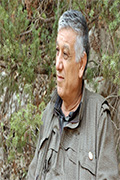 The AKP government is completely disregarding the opinion of the people. The AKP government believes that it can resolve everything by force; and it seems to take confidence in its being the biggest police state in the world.
It is very difficult for a political power to continue its existence for very much longer once it has begun to require the services of the police force to maintain its authority. The AKP government rather than strengthening itself through democratic progress, it is finding itself relying on the force of the police.
We can see a similar approach by the state towards Turkey's most important problem: the Kurdish problem. Although guerrillas of the Kurdistan freedom movement have been pulling out of Turkey's borders the state is yet to make any move towards democratization. The Kurdish freedom movement is taking the process very seriously, however this so far has not been reciprocated by the state. A state that approaches one of the most significant developments in its recent history in this manner cannot do much better when it comes to other social issues.
Last year, the Kurdish freedom movement freed its captives and withdrew its forces from within the borders and thus ensured an atmosphere of peace; at this stage nothing else can be expected from our movement. The AKP government must act now, or face being questioned on grounds of integrity and solemnity. At present many people are already questioning this. We believe that politics cannot be conducted with an anxious mindset; however, this lack of integrity will be seriously evaluated by the Kurdish freedom movement.
If the AKP government is of the belief that the Kurdish freedom movement has no other choice but to pursue this process then it is wildly mistaken. The Kurdish freedom movement has the support of tens of millions of people and thousands of dedicated cadres; anyone who does not take this seriously does so at their own peril. If the AKP government thinks that it can once again mislead or divert the attention of the Kurdish people's leader Ocalan or the Kurdistan freedom movement it is deceiving itself.
The AKP government should at once reanalyze the gravity of the retrieval of the guerrilla forces and act accordingly. If a government who previously has made claims that "if the guerrillas retreat then the problem will be resolved" is remaining static and inactive then questions of integrity will naturally persist. This at the very least can only be defined as carelessness. If the government does not wake up soon, then it will surely be unable to bare the heavy burden that will follow.
The PKK is a forty year old party. Throughout this time it has been doing politics and struggling in the hardest part of the world. Any organization that has maintained itself and persistently struggled in the Middle East for forty years has no doubt vastly gained political experience and accumulated a huge potential of belief and struggle. Anyone that does not take this seriously will surely sink.
This organization, along with its leadership, cannot be misled. The guerrillas pulled out of the borders for a democratic process to begin. This means legal and constitutional reform. It is now way past the time for these steps to be taken. Work on a new constitution should should have been stepped up and finalized. At the very least, if the government is sincere, it must allow the head-negotiator of the Kurdish people to appropriately carry out this role.
The time has come for the demands of democracy and freedom of the Kurdish people – who have been struggling for these for the past forty years – to be met. Otherwise the Kurdish people are prepared to struggle for many more years to come. Slavery will not be accepted so struggle will always persist. If the freedoms of the Kurdish people are not granted than the struggle will only get stronger. The Kurds possess a tradition of struggle and uprising. It is for this reason that those who believe that they can stay in government without resolving the Kurdish question have not yet understood the matter in hand.
The Kurdish freedom movement has so far done everything it has promised to do. It is now the turn of the government to do so. It must take steps in a way that builds confidence among the Kurdish people and the forces of democracy in Turkey. The AKP must meet the demands of the Kurdish freedom movement, the Kurdish people and the democratic forces of Turkey as soon as possible.
Writing by Cemil Bayık
http://kurdishquestion.com/north-kurdistan/turkey/the-process-where-are-we.html
- Details
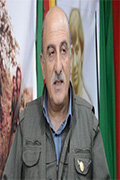 There were two specific characteristics of the local elections held in Turkey on the 30th of March. The first was the fact that the election was a showdown between the AKP and the Fetullah Gulen movement; or, to be even more precise, a showdown between Recep Tayyip Erdogan and Fetullah Gulen.
The second distinct characteristic was the head-to-head struggle between the BDP and the AKP in Kurdistan. This can also be defined as the struggle between the organised face of the Kurdish political struggle, the BDP, and representing the Turkish state, the AKP.
In terms of both of these main characteristics, the local elections was more a referendum. As a matter of fact, during the heated debates leading up to the election, all sides uttered this very word.
The Republican People's Party (CHP) and the Nationalist Action Party (MHP) were barely able to proclaim themselves as subjects of the election. This is because in terms of being an alternative to the AKP, both these parties fall way short. Due to their extreme nationalism and actual fascism, they can't even be recognised as democratic alternatives. Even though they tried to benefit from the AKP-Fetullah conflict to muster a few extra votes, they were woefully unsuccessful.
The conflict between the AKP and the Fetullah Gulen movement has ended the coalition that brought them both to power on the 3rd of November, 2002. There is no longer an AKP-Fetullah Gulen coalition.
Without a doubt, the USA, EU, KDP, CHP and MHP all have vested interests in this conflict. Even Iran, Russia and China could be added to these. In 2002, the USA backed this coalition, however, in the recent conflict the USA clearly sided with the Fetullah Gulen movement. Maybe the best way to define the conflict politically is that it is actually between the AKP and the USA. The Fetullah Gulen movement has been utilised by the USA in this conflict.
The separation of political paths during the past three years between the USA and the AKP is clear for everyone to see. This process began as a conflict between the AKP and Israel; however, step by step, the policies towards Iran, Iraq, Egypt and Syria turned this into a separation between the USA and the AKP. Behind the Fetullah Gulen movement is coalition of the USA, United Kingdom, Israel and the CHP-MHP; while the AKP has been able to rally support from Germany, France, Russia, Iran and China. Although the administration in South Kurdistan - specifically the KDP - has relationships with both sides, during this time it has largely supported the AKP. The decisive factor here being the as of yet not very well documented depth of the economic and business ties between the AKP and the KDP.
Preliminarily, it seems as if Recep Tayyip Erdogan has come out on top in the duel played out on the 30th of March. I say preliminarily because the way the USA and the Fetullah Gulen movement conduct their business is not similar to that of the AKP. Therefore, even though they lost at the ballot box on the 30th of March, this does not mean the fight is over for them. Recep Tayyip Erdogan, by singularising the target as the Fetullah Gulen movement, pulled these powers into its own fighting arena - the ballot box - where he was able to beat them. However, the forthcoming presidential and general elections will no doubt be seen by the USA and the Fetullah Gulen movement as an opportunity for revenge.
Politics in Turkey is passing through a very critical stage. The campaign for presidential election due to take place in August has started. This election will be more decisive in announcing the real winner and will give us a clearer insight into the new politics of Turkey. It is as of yet unclear how each conflicting side will approach the aforementioned election. However, there are signs for both a reconciliation or a deepening of the conflict. Whereas the possible approach of the USA-Fetullah Gulen movement is unclear, the AKP is seeming to look for a reconciliation but without a retreat of its current stance.
It can be observed that the AKP's plan is for Recep Tayyip Erdogan to be President, while Abdullah Gul becomes Prime minister. By getting the USA to accept this formula, the AKP is looking to reconcile with the USA. However, the USA's stance on this is not yet clear. Besides, this formula also depends on the stance of the Kurds.
On the 30th of March, the overwhelming majority of the Kurdish people voted for "Democratic Autonomy". The fact that the BDP won mayorships in a total number of eleven cities, of which three were metropolitan, shows this; even though it could hardly be called a fair and democratic election. The AKP disproportionately utilised all state apparatus and even cheated in places like Urfa, Bingol, Mus, Tatvan, Ceylanpinar and Agri. It can be easily said that this was the most unfair and fraudulent election of the Republic's ninety year history. Depsite this, the BDP came out with an overwhelming win.
The unassimilated part of Kurdistan, east of the Euphrates, has clearly voted for democratic autonomy. It is well known to everyone that the cities of Urfa, Bingol and Mus were fraudulently won by the AKP. Despite this, the election map clearly marks out a geography demanding for democratic autonomy. The results to the West of the Euphrates, only shows the humanitarian crime committed by the Turkish state in assimilating the Kurds.
In the referendum of the 30th of March, 2014, the Kurds said yes to democratic autonomy. This is the fourth referendum that the Kurds have recently won. The first was on the 29th of March, 2009. The organised face of the Kurdish political struggle back then was the DTP. Preceding that was the referendum that was held on the 12th of September, 2010. Those who wanted democratic autonomy in Kurdistan also won this referendum. The third referendum in which the Kurds were victorious was the general elections held on the 12th of June, 2011.
Therefore, the elections held on the 30th of March was the fourth referendum. It is time for everyone to recognise the will of the Kurdish people demanding for democratic autonomy. Those that are not separatists and are for democratic unity should specifically recognise this.
However, it is evident that neither the Turkish state or the AKP government want to recognise this will. It is also evident that other powers such as the European Union do not have a different stance to that of the Turkish state. Everywhere these powers talk about "the will of the people", however, when it comes to the Kurds, this principle is forgotten. Global democracy cannot be realised with such a double standard.
Rather than acknowledging the will of the Kurdish people and solving the Kurdish question within a democratic framework, the AKP government is choosing to crush and eradicate the Kurdish freedom movement. The AKP is increasing military activity in Northern Kurdistan. It is also supporting Al-Qaeda affiliated gangs in Western Kurdistan (Syrian Kurdistan), openly threatening the Kurds of Rojava. Political imprisonments and police terror against the Kurds is continuing relentlessly. Rather than saying "Yes" to the Kurdish people's leader Abdullah Ocalan's efforts for a peaceful and political solution, it is choosing to continue its policies of delay and fraud.
What can the Kurdish people do in this case? It has won in four referendums yet its will is not being respected. In order to exist and live freely no other option is being left to the Kurds, other than resistance. This being the case, no one should doubt the ability of the Kurds to resist until a free and honourable life is attained!
WRİTİNG by Duran Kalkan - Member of the Executive Committee of the PKK
- Details